Published Date : May 8, 2025

What Is DNS (Domain Name System)?
The Domain Name System, or DNS, is the fundamental translation layer of our digital world. We humans communicate using memorable names like Google.com, but computers require numerical IP addresses to locate and connect with one another. DNS bridges this gap by acting as a distributed directory that resolves these human-friendly labels into the machine-readable coordinates needed for data routing.
The process begins when you enter a URL into your browser. Your request travels to a recursive resolver, which queries a hierarchy of specialized servers, including the Root, TLD, and Authoritative nameservers. This structured sequence identifies the exact location of the website and returns the IP address to your device. This happens in milliseconds, ensuring that your online navigation remains seamless and intuitive.
Why is DNS Important?
DNS is the invisible anchor of modern connectivity. Without it, exploring the internet would require memorizing complex numerical strings for every service. Beyond simple convenience, it provides the agility needed to manage global traffic and strengthens security by filtering malicious sites at the source. It is the cornerstone of a reliable and professional digital presence.
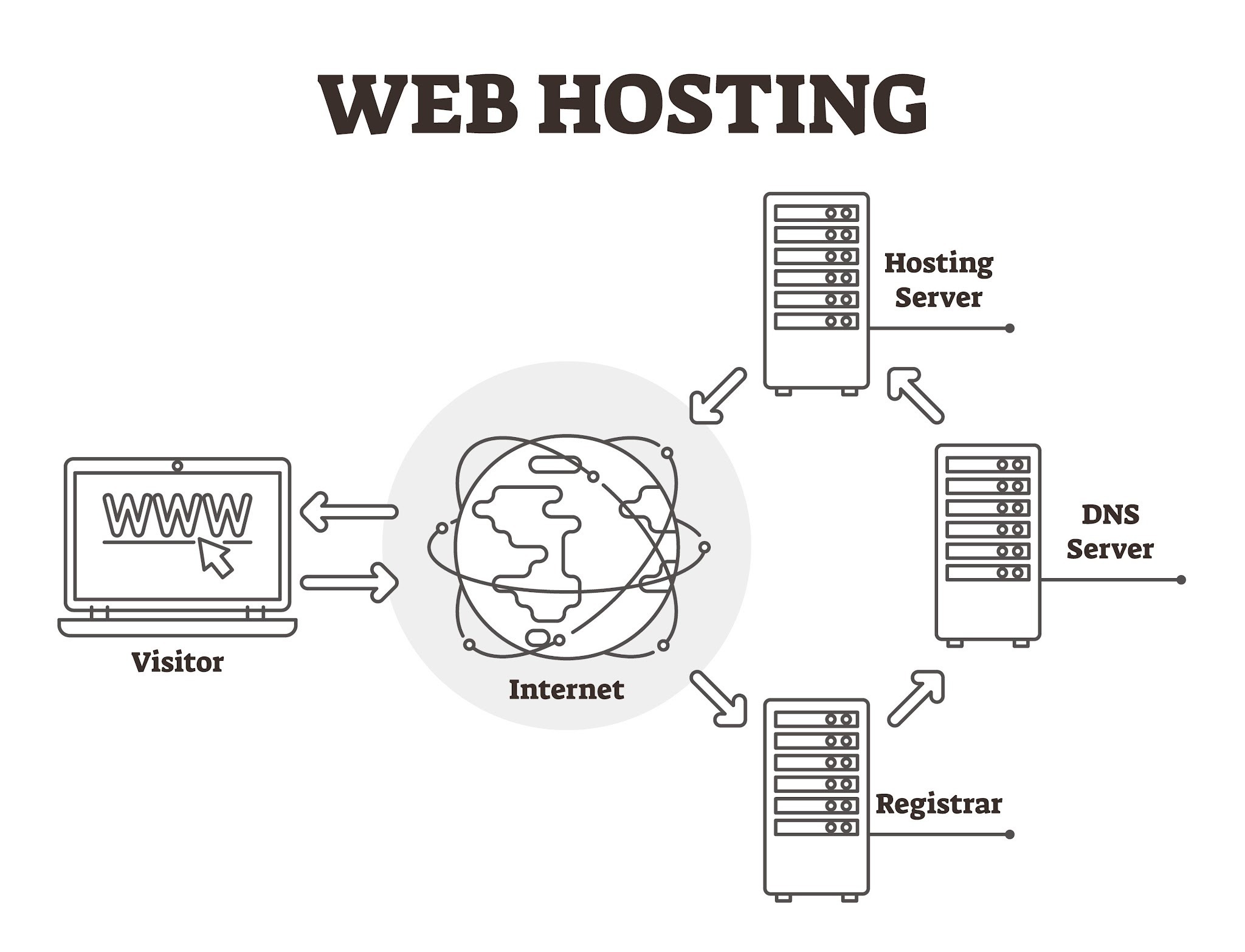
How DNS Works
DNS functions through a sophisticated, tiered architecture designed to maintain order across the vast internet. It uses a decentralized model where responsibility is shared among different levels of servers, instead of relying on a single, massive database. This structure ensures high availability and speed, allowing the system to scale alongside the growing number of devices and websites globally. By distributing the workload, DNS prevents any single point of failure from disrupting the entire network, providing the resilience required for modern enterprise operations.
Step-by-Step DNS Resolution
The journey of a DNS query is a highly orchestrated series of events that happens in the background of every online action. By breaking down these steps, we can see how the system ensures accuracy at every turn.
- The User Query: This begins at the browser level. Before reaching out to the internet, the operating system checks its local cache to see if it already knows the address from a previous visit.
- The Recursive Resolver: This is the first external stop. This server is responsible for doing the legwork of querying other servers on your behalf to find the correct answer.
- The Root Nameserver: This serves as the starting point of the global search. It does not hold the IP address itself, but it directs the resolver toward the correct Top-Level Domain servers based on the extension of the website.
- The TLD Nameserver: These servers categorize domains by their extensions, such as .com, .org, or .gov. They guide the query to the specific server that holds the individual domain records.
- The Authoritative Nameserver: This is the final source of truth for the domain. It provides the specific IP address associated with the request, completing the search.
- The Final Response: The resolver delivers the IP address back to the user and saves a copy in its cache. This streamlines future requests and reduces the time needed for the next connection.
DNS Hierarchy Explained
The DNS hierarchy is organized much like a corporate organizational chart or a logical filing system, where authority flows from the top down. This structured approach is what allows the internet to remain stable even as millions of new domains are added every year. By delegating responsibility across different layers, the hierarchy ensures that no single server has to carry the burden of knowing every single address on the web.
In 2026, we view this hierarchy as the foundation of digital trust. It ensures that when you request a specific service, you are directed to the authentic destination rather than a malicious lookalike.
- The Root Level: This sits at the very top of the pyramid. Though it does not store specific website data, it acts as the ultimate director. It points queries toward the correct Top-Level Domain servers based on the extension of the website you are trying to reach.
- Top-Level Domains (TLD): This layer categorizes the internet into broad buckets. This includes generic extensions like .com and .org, as well as country-code extensions. These servers manage the registry for all domains that fall under their specific umbrella.
- Second-Level Domains: This is the level most familiar to businesses and users. In a domain like paramountassure.com, “paramountassure” is the second-level domain. This is the unique identity that an organization registers and manages.
- Subdomains: These are optional additions used to organize specific sections of a digital estate. For example, a company might use “portal.example.com” or “shop.example.com” to separate different services while keeping them under the same primary brand.
By maintaining this clear chain of command, the DNS hierarchy provides the scalability and reliability required for global commerce and communication. It allows for decentralized management where every organization can control its own records while remaining part of a unified global system.
Types of DNS Records
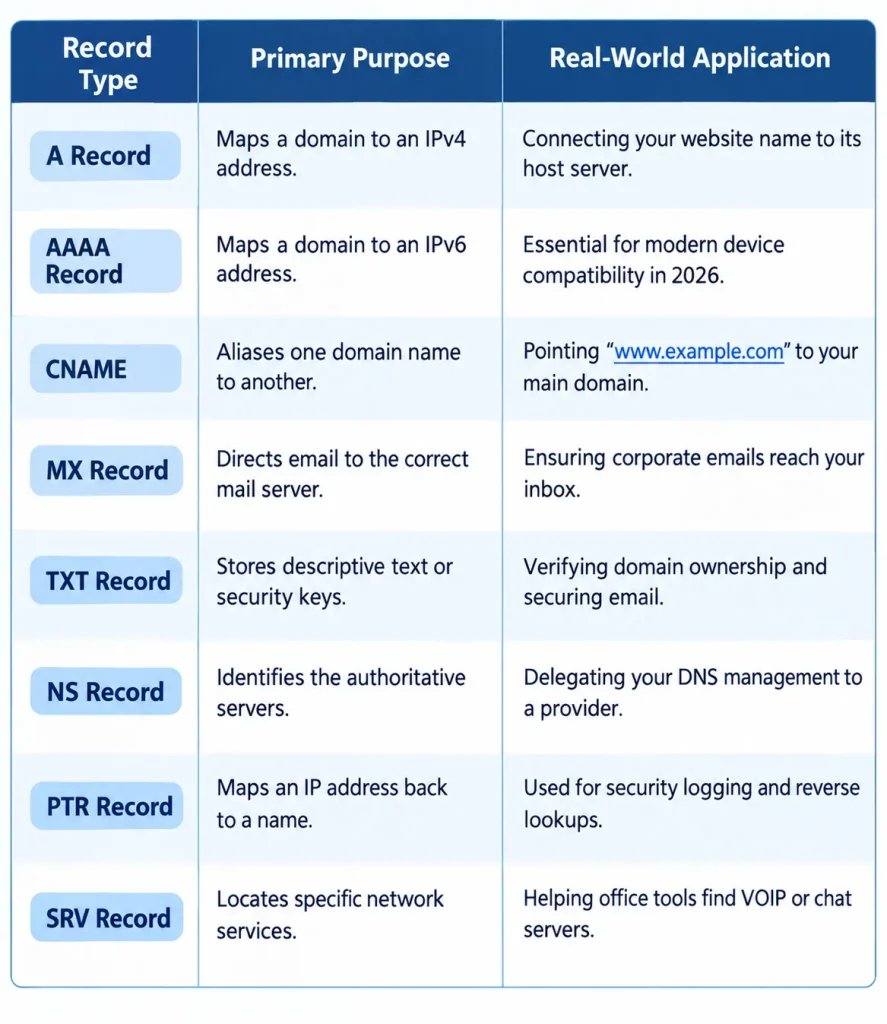
While we often think of DNS as a single link between a name and an IP address, it actually manages many different types of information. Each record type serves a specific purpose, from directing web traffic to ensuring email security and validating domain ownership. In a professional 2026 infrastructure, managing these records correctly is essential for maintaining both visibility and site performance.
The following table outlines the most common records that modern IT teams manage on a daily basis.
DNS vs IP Address
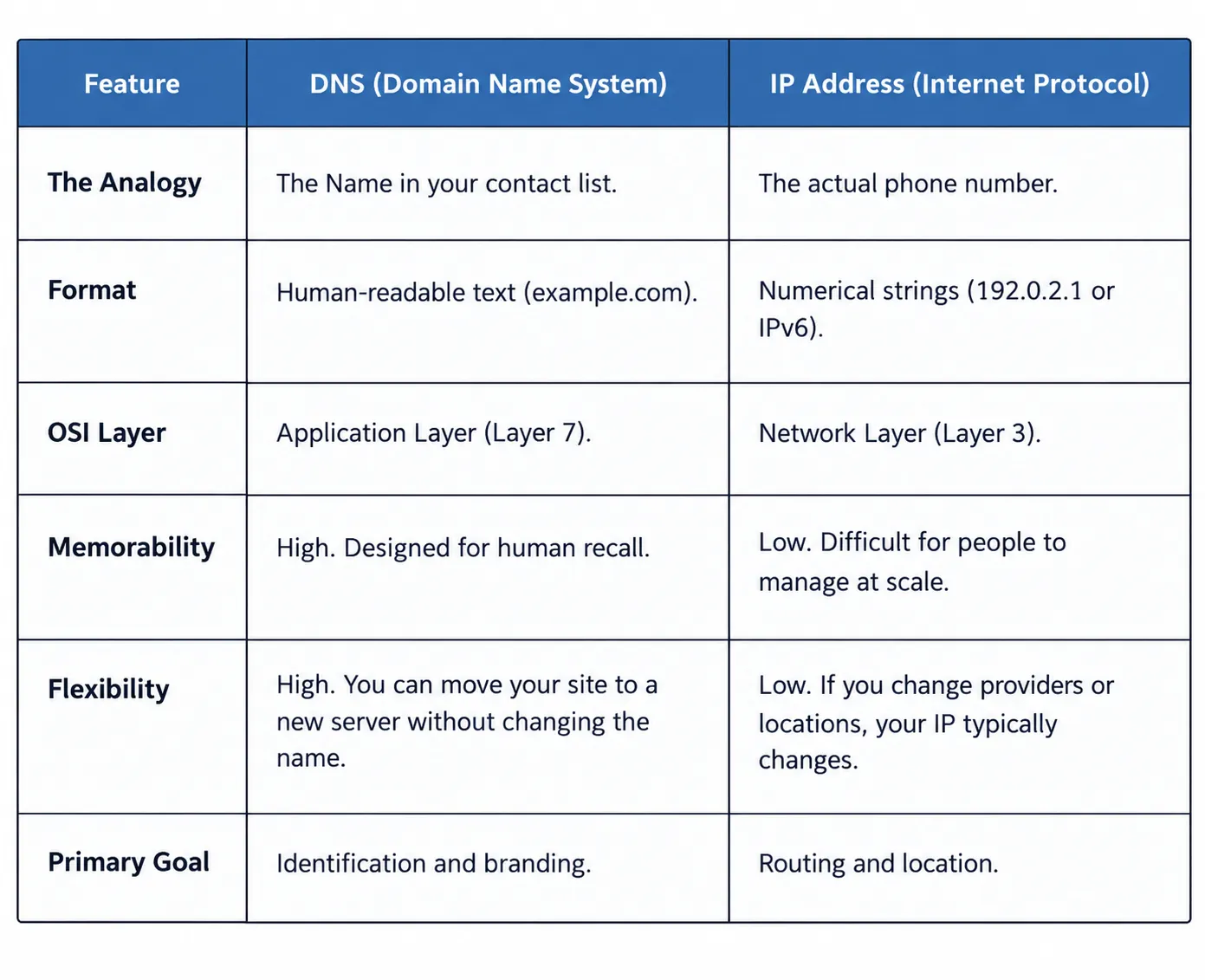
To understand the modern internet, we must recognize the partnership between DNS and IP addresses. One represents how humans identify a destination, while the other provides the precise technical coordinates for the machines. In 2026, these two systems work in tandem to ensure that every click and every data transfer reaches its intended target with surgical precision.
While they are often discussed together, they serve very different roles in the networking stack. The following table highlights the key distinctions that every IT professional should keep in mind.
DNS Security Risks
Because DNS is an open and trusting system by design, it has become a frequent target for those looking to disrupt operations or steal sensitive data. For a professional organization, a compromise at the DNS level is catastrophic because it undermines the very foundation of digital trust. If your users cannot trust that your domain name leads to your actual server, your entire security perimeter is at risk.
Modern security teams must stay vigilant against several sophisticated methods used to exploit this protocol.
- DNS Cache Poisoning: This is a technique where an attacker sends fraudulent information to a DNS resolver. If the resolver accepts this data, it stores the incorrect IP address in its cache and directs all subsequent users to a malicious website. It is essentially like replacing a legitimate map with a fake one that leads travelers into a trap.
- DNS Hijacking: In this scenario, the attacker gains unauthorized access to your domain registrar or your DNS provider. Once inside, they can simply change your records to point toward their own servers. This is particularly dangerous because it is often difficult to detect immediately, as the map itself has been altered at the source.
- DNS Tunneling: This is a more covert threat where attackers use DNS queries to move data in and out of a network. Since most firewalls allow DNS traffic to pass through freely, attackers can hide malicious payloads within these requests to bypass security controls and exfiltrate data without being noticed.
- Distributed Denial of Service (DDoS): These attacks aim to overwhelm your DNS infrastructure with a massive volume of fake requests. By flooding your nameservers, attackers can make it impossible for legitimate users to resolve your domain, effectively taking your business offline.
- Domain Squatting and Lookalikes: Attackers often register names that are visually similar to your own. By using typosquatting or character substitutions, they create deceptive sites that trick your employees or customers into entering their credentials on a page that looks exactly like your authentic portal.
Protecting against these risks requires a multi-layered approach that includes implementing DNSSEC to sign your records and using specialized monitoring tools to spot anomalies in your traffic patterns.
DNS in Cybersecurity & Enterprises
Today, we no longer view DNS as just a technical utility. It has become one of the most powerful layers in our cybersecurity stack. Since nearly every interaction on the network begins with a DNS query, it provides a unique vantage point for both visibility and defense. By securing this layer, enterprises can stop threats before they even touch the internal network.
Modern organizations leverage DNS as a strategic asset in three primary ways.
- Proactive Threat Filtering: Rather than waiting for a firewall to spot malicious traffic, enterprises use protective DNS services to block connections at the source. If an employee accidentally clicks a phishing link or a piece of malware tries to call home, the DNS resolver simply refuses to provide the IP address. This effectively “blinds” the threat and prevents the connection from ever being established.
- The Foundation of Zero Trust: In a Zero Trust environment, we assume no user or device is safe by default. DNS is used to enforce these boundaries by ensuring that internal application names only resolve for users who have been properly authenticated and verified. This prevents attackers from “mapping” your internal network even if they manage to gain a foothold in your system.
- Business Continuity and Resilience: For global enterprises, DNS is the key to maintaining 100% uptime. Through Global Server Load Balancing, IT teams can automatically redirect traffic based on the health and location of their data centers. If a server in London faces a localized outage, the DNS layer can instantly route those users to a healthy instance in Dubai or Singapore. This happens so quickly that the end user never experiences a service interruption.
Conclusion
Effective DNS management requires continuous vigilance and ensuring proactive monitoring to safeguard your organization’s digital domain.
From the first time your browser pings a server to the moment a website loads, DNS is involved. It’s more than just a utility, it’s a crucial piece of the performance and security puzzle. Whether you’re an average user or a tech pro, knowing how DNS servers operate and how to secure them gives you a real edge.
Faq
We use DNS because there is a fundamental disconnect between how humans think and how computers communicate. Humans are language-based and remember names like “google.com” easily. Computers are math-based and require numerical IP addresses to find one another. DNS acts as the essential translator between these two worlds. Without it, the internet would be a massive, unusable list of numbers that would be nearly impossible for the average person to navigate.
When we discuss the “four types” of DNS, we are usually referring to the four distinct servers that work together during the resolution process. These include:
- Recursive Resolvers: The first point of contact that does the heavy lifting for the user.
- Root Nameservers: The ultimate directory that points the resolver in the right direction.
- TLD Nameservers: Servers that handle specific extensions like .com or .net.
- Authoritative Nameservers: The final source of truth that holds the actual IP address for a domain.
In a standard enterprise network, we typically rely on seven primary types of servers to keep the business running. These include Web servers for hosting sites, Mail servers for communication, File servers for storage, and Database servers for structured information. We also utilize Application servers to run specific software, DNS servers for name resolution, and Proxy servers to act as a gateway and security layer between internal users and the open web.
The “best” server depends entirely on your specific priorities for speed, privacy, or security. For those prioritizing raw performance, Cloudflare (1.1.1.1) is often cited as the fastest option globally. If your focus is on reliability and a massive global footprint, Google Public DNS (8.8.8.8) is a consistent professional choice. For organizations that prioritize security and threat blocking at the DNS level, Quad9 (9.9.9.9) provides an excellent layer of protection by automatically blocking known malicious domains.
DNS should always remain “on.” It is a fundamental requirement for modern internet connectivity. If you were to turn off your DNS settings or disable the service, your device would still be physically connected to the network, but it would be unable to find any websites or services by name. Unless you are a highly specialized network engineer working in a very specific lab environment, keeping DNS active is the only way to ensure your applications and tools continue to function as intended.
