
Blog
The End of the Password Era: What Passwordless Authentication Means for Dubai’s Digital Future
Dubai has long been at the forefront of technology adoption, consistently embracing innovation ahead of the curve. As government groups move their work to the cloud and have more people working from home, they’re spending a lot of money to keep everything safe. But there’s one big problem that’s getting in the way of their goals, and it’s not some malware or a hacker. It’s something much simpler, but also much more basic – the passwords.
The problem isn’t that passwords are easy to guess. It’s that the whole system of sharing secret codes, using one-time passwords, and sending verification codes by text message was never designed to handle the kind of threats we see today. This is a big issue for government and semi-government organizations in Dubai, and it’s creating a bit of a paradox. The more they try to make passwords secure, the more hassle they create for users, and the more weaknesses they accidentally introduce.
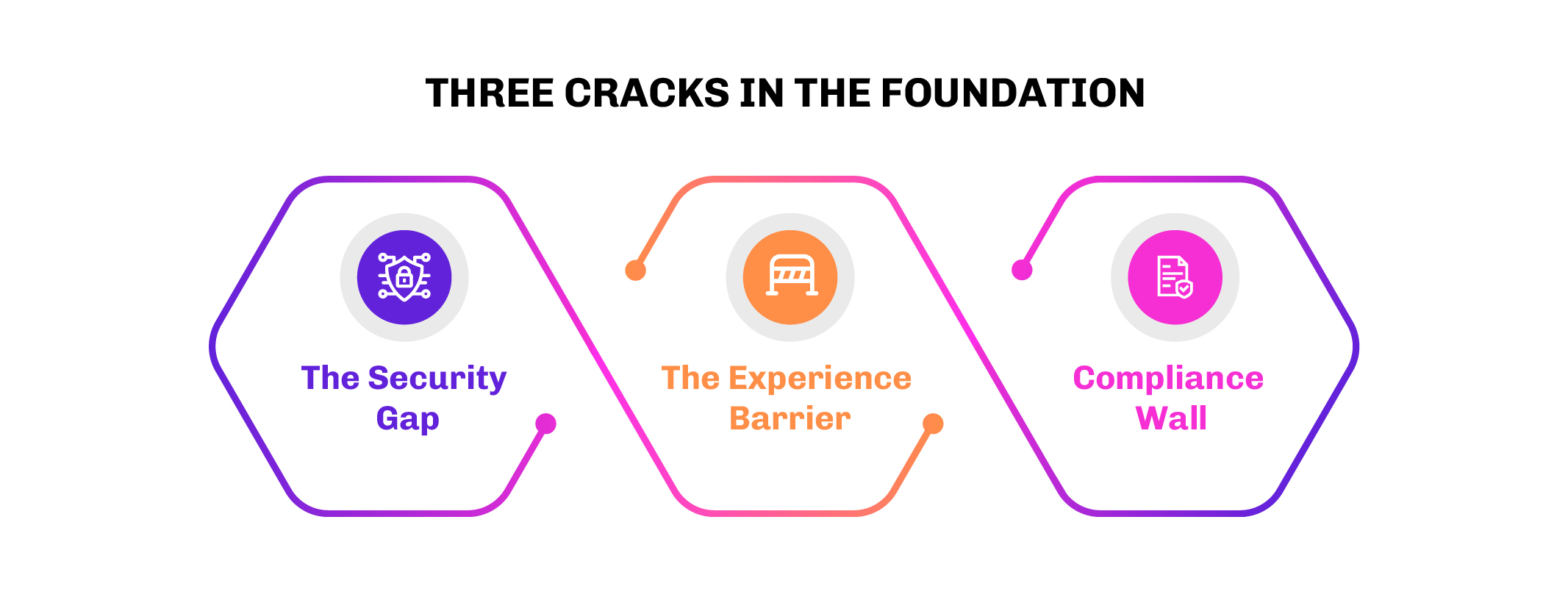
Three Cracks in the Foundation
The password paradox is made up of three big problems that can’t be completely fixed by any rules or education efforts.
- The Security Gap:About 80% of data breaches happen because of weak or stolen passwords. The usual ways of adding safety, like SMS, OTP, and push notifications, still have a big challenge: they rely on shared secrets that can be tricked out of people or intercepted. Just adding more layers to a system that’s already broken doesn’t fix the problem at its core.
- The Experience Barrier:Having super strict security can hurt how well people can do their jobs. When you must use long passwords, like 14 characters, and get asked to verify your identity all the time, it can be really irritating for employees. This ends up overwhelming the IT department with requests to reset passwords, which is a big waste of time.
- Compliance Wall:These days, most top-notch security solutions for checking identities are based on cloud services. However, for government and semi-government organizations in Dubai, using these advanced cloud-based security solutions is limited by strict rules – the DESC Cloud Service Provider Security Standard and UAE Data Residency laws. This means they have to be careful about how they store and manage their data, and make sure it’s all done locally, without sending it outside the country.
These are not isolated pain points. They compound each other, and no partial fix addresses all three simultaneously.
True Passwordless: What It Actually Means
The market has a lot of solutions that promise to be “passwordless”, but the truth is, most of them aren’t. They often have a backup plan that still uses passwords, or they rely on passkeys that are stored on cloud servers, which can be a security risk. Some of these solutions even create new weaknesses that can be exploited by hackers, instead of getting rid of the old ones.
True Passwordless is set up in a completely different way. It uses something called FIDO2 public key cryptography. This means a private key is created right on the user’s device and never sent or stored anywhere else. There’s no secret code shared with anyone. That means there’s nothing for hackers to phish, steal, or intercept. When you log in, it’s tied to the device you’re using and a biometric signal, like a fingerprint or Face ID. This makes it way more secure and easier to use than any system that relies on passwords.
For government entities in Dubai, there’s an extra step to take: the solution needs to be certified by DESC CSP and hosted within the UAE’s borders. This is where HYPR comes in, offering top-notch passwordless security that meets enterprise standards, along with compliance that respects the country’s sovereignty.
Why HYPR… and Why Now
HYPR is one of the few identity platforms in the world that has the DESC CSP Certification. This means the Dubai government can use it without worrying about breaking any rules. The good thing is that all the data is stored locally in the UAE, so sensitive information about people’s identities doesn’t leave the country.
The platform is built around three tightly integrated modules:
- HYPR Affirm (Identity Proofing): is a way to automatically check someone’s identity when they’re signing up or doing something that’s a high risk. It looks at official documents like passports and national IDs to make sure they’re real, and it also checks to see if the person is actually alive and present. This helps ensure that the person creating a passkey is really who they say they are.
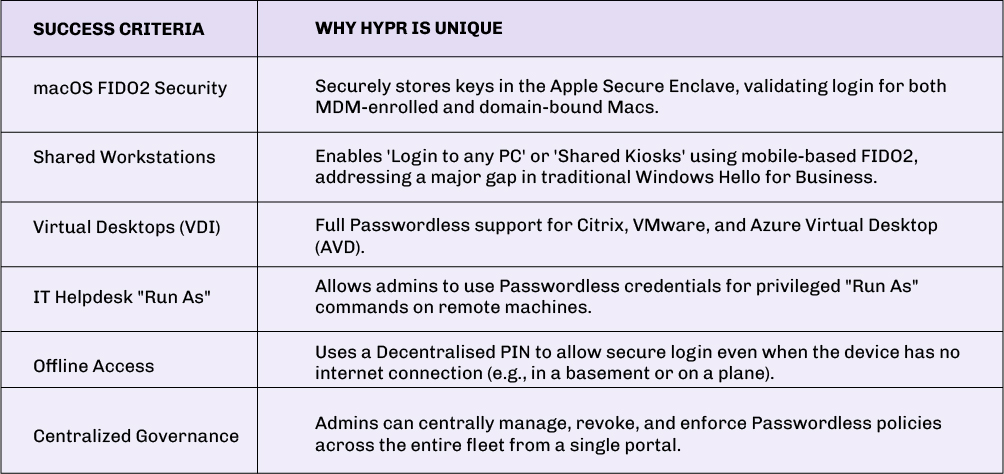
- HYPR Authenticate (The Engine):is a gamechanger: it gets rid of passwords and uses device-bound FIDO2 passkeys instead, giving you a super smooth biometric-first login experience. This works across lots of different platforms, like Windows, macOS, Linux, and even virtual desktop environments like Citrix, VMware, and Azure Virtual Desktop. Plus, it’s compatible with older on-premises applications too. The best part? You can access all of these with just one simple gesture.
- HYPR Adapt (Risk-Based Intelligence):Continuously monitors contextual risk signal’s location, device health, user behavior and automatically triggers step-up authentication or re-verification when risk thresholds are crossed, without disrupting the standard user experience.
Built for the Real Enterprise
Most passwordless solutions work fine when everything goes smoothly. But HYPR is different, it’s built to handle the complicated situations that often come up in big companies, where regular tools usually struggle to keep up.
The Business Case Is Unambiguous
Getting rid of passwords has a big impact right away. People can log in up to three times faster, without waiting for one-time passwords or dealing with complicated password entries. New employees can get started in just a minute, instead of taking a whole day. According to research by Forrester, using HYPR can even save companies a lot of money around 324% return on investment. This is mainly because they don’t have to spend as much on help desk costs for resetting passwords, which usually takes up 30-40% of all IT support work.
The market for passwordless authentication is really taking off. It was worth $22.15 billion in 2025, but by 2035, it’s expected to reach a whopping $92.69 billion. That’s a huge jump, with a growth rate of 15.39% per year. This shows that more and more companies are adopting passwordless authentication worldwide, and it’s happening fast. According to a report by Precedence Research on the passwordless authentication market, this trend is likely to continue.
The change is real and it’s happening now. Companies that wait are not just taking a chance; they’re also wasting money that they could be saving. Every day they delay, they lose out on opportunities to cut costs and stay ahead.
Compliance, Sovereignty, and the DESC Mandate
For organizations in Dubai, especially those in the government and semi-government sectors, using a cloud authentication solution that isn’t certified by DESC is a serious issue. It’s not just a matter of taking a risk, it’s actually against the rules. The DESC CSP Security Standard clearly states that all cloud services used by the public sector in Dubai must be certified, and this includes the systems used to manage identities.
HYPR’s system is set up to keep all data within the UAE, which is what the country’s rules require. This means that important information about people’s identities stays inside the country’s borders, not just because it can be configured that way, but because that’s how the system is designed to work from the start. This is the level of quality that Dubai’s plans for a digital future demand.
The Path Forward
By 2026, passwordless security is no longer something we’re waiting for – it’s something we need now. Any company still using passwords to keep their systems safe is taking a risk that’s real, avoidable, and getting more expensive every few months.
Paramount is a trusted partner of HYPER and offers a 360 degree solution that covers all the requirements. This includes a deployment that follows the rules, a smooth way to verify identities, a smart system to assess risks, and a way to govern the whole organization. All of this is done from one platform that has been certified and is strong enough to handle the needs of both the public and private sectors in the UAE.
Are you ready to ditch passwords from your security setup?
Get in touch with our experts to build a HYPR-powered DESC compliance strategy.
Recent Posts
- Cloud Migration Strategy for Middle East Enterprises: A Complete Guide
- What Is Zero-Trust Security Model and Why GCC Enterprises Are Adopting It Now
- 3 Reasons Your Cybersecurity Strategy Isn’t Working—And How to Fix It
- Essentials To Achieve Information Security Compliance
- From Cybersecurity to Career Security: How Women Can Gift Knowledge to Broaden the Tech Pipeline
FAQs
Passwordless authentication allows users to access systems without entering a traditional password. Instead, it uses methods such as FIDO2 passkeys, biometrics, device-based authentication, or cryptographic credentials to verify identity securely. FIDO explains that passkeys let users sign in using the same method they use to unlock their device, such as biometrics, PIN, or pattern.
Dubai organizations are moving toward passwordless authentication because passwords create security, user experience, and compliance challenges. The blog highlights risks such as stolen credentials, SMS/OTP weaknesses, frequent verification fatigue, and the need for cloud identity solutions that align with DESC and UAE data residency expectations.
Passwordless authentication reduces reliance on shared secrets that can be guessed, stolen, phished, or intercepted. FIDO standards use public key cryptography, where the private key stays with the user’s device and is not shared with the service provider.
FIDO2 is a passwordless authentication standard based on public key cryptography. It allows users to authenticate through device-bound credentials, often using biometrics or device unlock methods instead of passwords. The blog positions FIDO2 as a stronger foundation for secure, phishing-resistant identity access in Dubai.
According to the blog, HYPR supports passwordless authentication through identity proofing, device-bound FIDO2 passkeys, biometric-first login, and adaptive risk-based authentication. The page also presents HYPR as a suitable option for Dubai organizations that need enterprise-grade passwordless access with compliance and sovereignty considerations.

Protect your online assets from cyber threats with Paramount
Comprehensive cyber security solutions for individuals and businesses
Significantly reduce the risk of cyber threats and ensure a safer digital environment.
